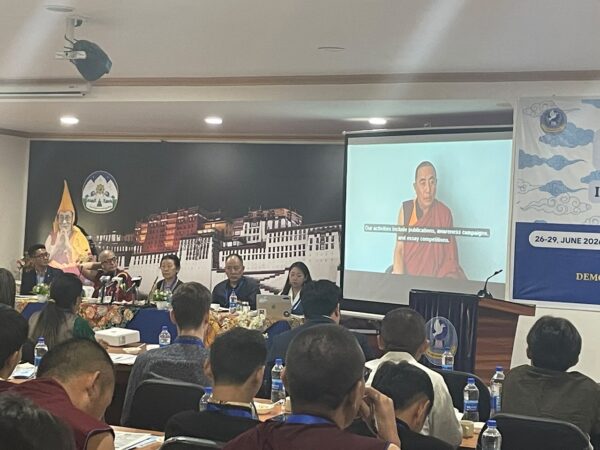
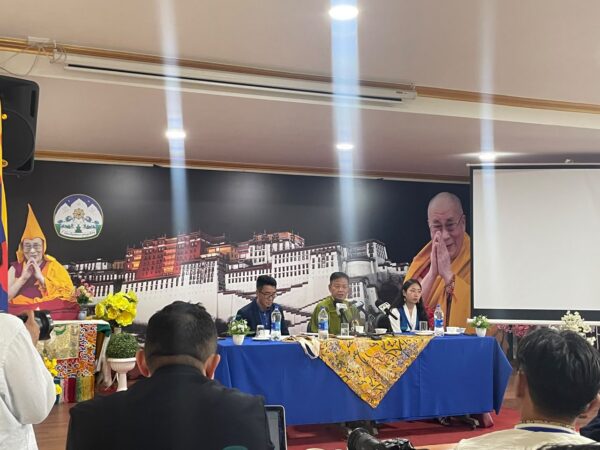
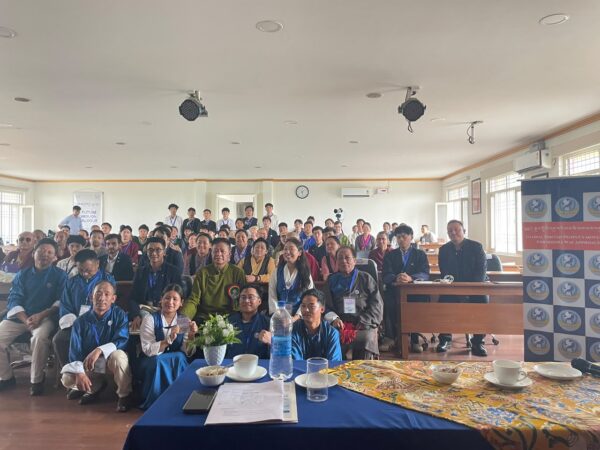
International Conference on Sino–Tibet Relations: Democracy, Dialogue, and the Middle Way Approach held at ATWS Dharamshala
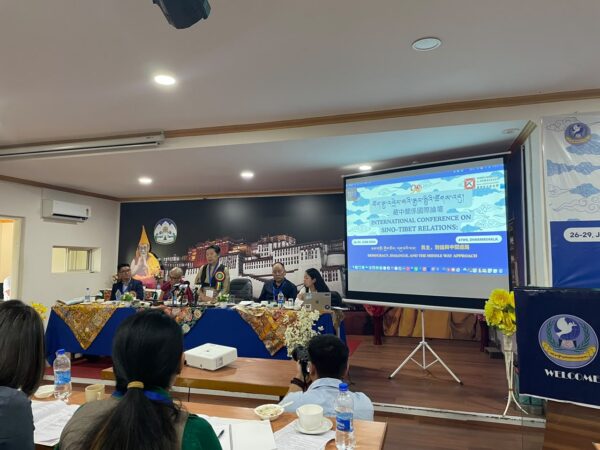
By ATWS Staff Editor:
ATWS Dharamshala, July 1, 2026: A four-day International Conference on Sino–Tibet Relations: Democracy, Dialogue, and the Middle Way Approach was held from 26 to 29 June 2026 at the Administrative Training and Welfare Society (ATWS), Dharamshala.
Organized by the Global Tibetan People’s Movement for the Middle Way Approach (GTPM), registered as the Center for Middle Way Initiative, the conference formed part of the commemorative events celebrating the 90th Birthday of His Holiness the 14th Dalai Lama as Year of Compassion. ATWS provided the conference with venue and service facilities
The conference was formally inaugurated on 26 June by Mrs. Dolma Tsering Teykhang la , Speaker of the Tibetan Parliament-in-Exile (TPiE), who attended as the Chief Guest.
In her key-note address, the Speaker discussed the origins and current state of the Sino-Tibetan conflict, stating that the People’s Republic of China (PRC) has shown insufficient commitment to resolving the issue through dialogue. She also asserted that the PRC continues to seek international legitimacy for its occupation of Tibet, despite what she described as its inconsistency with international law. Emphasizing the importance of peaceful engagement, she presented the Middle Way Approach as the most practical and sustainable path towards resolving the longstanding conflict as envisioned by His Holiness the 14th Dalai Lama.
The opening ceremony also featured introductory remarks by GTPM Vice President Ms. Shinyi la and General Secretary Mr. Kunga Norbu la, followed by a video screening of welcome address from GTPM President Venerable Geshe Lobsang Choephel la.
Mr. Bari Dawa Tsering la a Member of the Tibetan Parliament-in-Exile, delivered a presentation on “Sino-Tibetan Relations and Contemporary Governance in Tibet under PRC Policies.”
The inaugural session was further graced by distinguished guests, including Mr. Tashi Tsering la, Representative of the Human Rights Network for Tibet and Taiwan, and Professor Kaveri Gill, Non-Resident Senior Fellow at the Shiv Nadar University, Delhi.
The conference aimed to foster high-level academic dialogue on Sino-Tibetan relations and their regional implications; promote greater understanding of the Middle Way Approach as a viable model of genuine autonomy; strengthen collaboration among Tibetan, Chinese, and international scholars; document the democratic practices of the Tibetan community in exile for comparative study; and develop policy recommendations for governments, international organizations, and civil society.
The conference was joined by scholars, policymakers, public representatives, college students, Tibet supporters, and members of the international community from across the world both online and in-person as well, providing a vibrant platform for scholarly exchange and constructive dialogue.
Around sixty-one participants physically attended the Conference.
The closing ceremony was graced by CTA Sikyong Mr. Penpa Tsering la , who delivered the keynote address on the Historical Foundations of Sino-Tibetan Relations. Reflecting on Tibet’s historical status, he expressed concern over China’s recently enacted Ethnic Unity and Progress Law, highlighting its potential implications for the preservation of Tibet’s distinct language, culture, religion, and national identity.
Both the Sikyong and the Speaker of the Tibetan Parliament-in-Exile called upon Tibetans and supporters worldwide to strengthen advocacy efforts and continue contributing to the Tibetan cause through peaceful and sustained engagement.
Over the course of the four-day conference, participants engaged in in-depth discussions on a broad range of contemporary and historical issues, including the evolution of the Middle Way Approach and comparative models of autonomy; the Tianxia theory and its implications; democratization and Sino-Tibetan relations; Tibet–Taiwan relations; the role and responsibilities of Tibetan youth; and the strategic importance of the Tibetan Plateau as Asia’s Climate Security Commons.
Read more on the below links